
Mozaic Component Technology · Reader
Seagate Gen 8 spintronic reader
The industry’s smallest, most sensitive magnetic field sensor
Using quantum‑level sensing to accurately read smaller, densely packed bits, our Gen 8 spintronic reader enables ultra‑high areal density with speed and precision.
Geometric enhancements improve sensitivity and accuracy generation over generation
Tunneling magnetoresistance achieves high-resolution magnetic readback
Magnesium oxide barrier undergoes controlled oxidation for optimal sensitivity
Precise reading from the intended track while minimizing crosstalk from adjacent tracks
How does the Gen 8 spintronic reader use tunneling magnetoresistance?
Reading data at the quantum scale.
Seagate’s Gen 8 Spintronic Reader harnesses tunneling magnetoresistance to achieve high‑resolution magnetic readback at ultra‑high areal densities.
Geometric enhancements improve sensitivity and accuracy, allowing the reader to reliably detect smaller, closely packed bits. This quantum‑based precision is essential for fast, accurate data access as storage density continues to advance.
Seagate’s Gen 8 spintronic reader marks a significant advancement in reading data from the densely packed tracks enabled by Mozaic™.
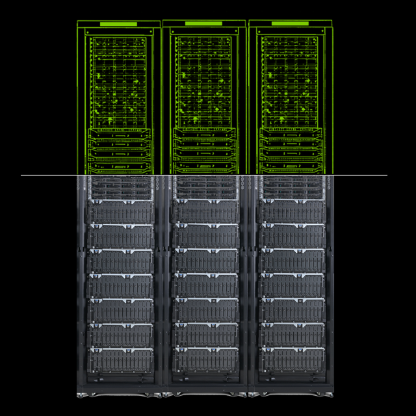
Which magnetic layers make up Seagate’s Gen 8 spintronic reader stack?
The read head includes a complex stack of magnetic and non-magnetic layers, each with a specific job.
The Free Layer (FL)
Sensitive to external magnetic fields from recorded data. This is the layer whose magnetic state changes in response to the bits passing underneath the head.
The Reference Layer (RL)
Holds a stable magnetic orientation, providing the fixed reference against which the free layer’s changing state is measured.
Synthetic Antiferromagnet
Prevents the reference layer’s magnetic orientation from influencing the free layer, keeping the measurement clean. Together these layers convert magnetic signals from recorded bits into electrical signals for data retrieval.

How does the Gen 8 spintronic reader hold signal-to-noise at high tracks per inch?
The stack’s design enhances sensitivity and signal-to-noise ratio.
Using specialized magnetic sensors, the reader detects changes in the magnetic field as the read head passes over recorded bits. This ensures precise reading from the intended track while minimizing crosstalk from adjacent tracks, enabling precise readback from the superlattice platinum-alloy media.
The stack is constructed through multi-chamber deposition. This manufacturing process remains under continuous vacuum to avoid contamination, with precise control over each layer’s thickness. Materials and layer thicknesses provide thermal stability, and the magnesium oxide barrier layer in the tunnel junction undergoes controlled oxidation for optimal sensitivity.
Why does spintronic reader sensitivity set the ceiling on hard drive capacity?
A drive can only hold as much data as its head can reliably read back. Writing bits closer together is only useful if the reader can still resolve each one.
That makes the reader a hard constraint on areal density. As bits shrink, the magnetic field each one produces shrinks with it, and the sensor has to detect a weaker signal without picking up the neighbouring track.
Quantum-based precision is what solves this: tunneling magnetoresistance gives a far stronger response to a small field change than earlier sensing methods, which is why eight generations of geometric refinement have translated directly into capacity.
Why areal density matters
How does the Gen 8 spintronic reader work with the plasmonic writer, superlattice media and the 7nm controller?
Mozaic is not one invention. It is four component technologies engineered in-house to work as a system.
Seagate’s documentation on tunneling magnetoresistance and Mozaic 3+
The platform these components add up to, and what it delivers.
Gen 8 spintronic reader: frequently asked questions
How a hard drive senses a bit, and why the sensor sets the capacity ceiling.
It is the industry’s smallest, most sensitive magnetic field sensor. Using quantum-level sensing to accurately read smaller, densely packed bits, Seagate’s Gen 8 spintronic reader enables ultra-high areal density with speed and precision.
Tunneling magnetoresistance is the quantum effect the reader harnesses to achieve high-resolution magnetic readback at ultra-high areal densities. It produces a large change in electrical resistance in response to a small change in magnetic field, which is what allows very small bits to be detected reliably.
The read head includes a complex stack of magnetic and non-magnetic layers: the free layer (FL) sensitive to external magnetic fields from recorded data, the reference layer (RL) with stable magnetic orientation, and the synthetic antiferromagnet to prevent the RL’s magnetic orientation from influencing the FL. These layers convert magnetic signals from recorded bits into electrical signals for data retrieval.
Using specialized magnetic sensors, the reader detects changes in the magnetic field as the read head passes over recorded bits. The stack’s design enhances sensitivity and signal-to-noise ratio, ensuring precise reading from the intended track while minimizing crosstalk from adjacent tracks.
The stack is constructed through multi-chamber deposition. The process remains under continuous vacuum to avoid contamination, with precise control over each layer’s thickness. Materials and layer thicknesses provide thermal stability, and the magnesium oxide barrier layer in the tunnel junction undergoes controlled oxidation for optimal sensitivity.
A drive can only hold as much data as its head can reliably read back. As bits shrink, the magnetic field each one produces shrinks too, so the sensor must detect a weaker signal without picking up the neighbouring track. Improving the reader is therefore a precondition for increasing areal density.
It is part of the Seagate Mozaic platform, which powers current Exos enterprise hard drives reaching up to 32TB with 3TB+ per platter areal density.
BlueAlly (DiskDataWorks.com) is an authorized Seagate reseller for the Exos enterprise portfolio. Call 844-356-5142 or request a quote online.
What does quantum-scale magnetic readback mean for your Exos capacity and power budget?
Our experts can help you find the right solution. Talk to a BlueAlly solution architect about deploying Mozaic-powered Exos drives — and what quantum-scale magnetic readback means for your capacity and power budget.
No-cost architecture assessment
Capacity-per-rack-unit and watts-per-terabyte modelling
Validated Exos configuration for your workload
Flexible procurement — CapEx or OpEx
Talk to an Expert
with a BlueAlly Solution Architect