

Why did Seagate combine machine learning with factory IIoT sensors?
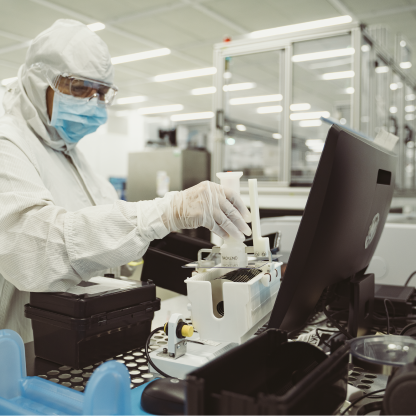
Seagate's Global Factory Information Technology (GFIT) team set out to assess AI-based solutions to apply within the company's factories with an emphasis on realizing value. Within the company's manufacturing facilities, a diverse assortment of complex semiconductor wafer processing equipment contains a significant deployment of industrial internet of things (IIoT) devices. These generate an immense amount of data, creating a rich and complex dataset that is ideal for AI analysis and processing.
The team started this project because they knew their tools generated vast amounts of data that could inform process and tool health. However, engineers were using a small fraction of it because they had to manually create numerous charts with static control limits. Traditional statistical process control (SPC) has demonstrated limited success within the factory control space.
They soon developed the concept of an autonomous monitoring system, able to monitor sensor-connected tools in the factory automatically, with integrated workflows to provide alerts on deviations. At its core, a Reconstruction Error-based Deep Learning 1-Dimensional Convolutional AutoEncoder effectively learns a golden tool fingerprint that represents the optimal process setup.
The goal: deploying AI for process improvement.
The mission was to utilize sensor data to drive operational efficiencies and product quality. They aimed to install an unsupervised detection and containment system leveraging AI models to monitor process and tool health. This would allow the engineering organization to identify deviations from historical populations and enact a control plan to contain or correct excursions. The team deployed the system across multiple Seagate factory commodities, while continuing to identify upgrade opportunities in the framework.