
Seagate Perspectives · Hard Drive Innovation
Hard drive areal density: TB per disk, TCO and sustainability
Authorized Reseller · Best Pricing · Guidance from Storage Engineers
The future of sustainable, mass-capacity storage is now.
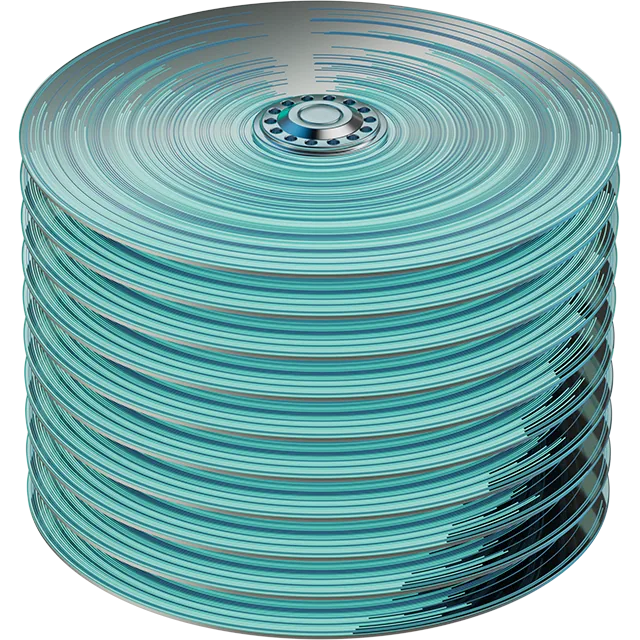
AI is driving data creation to triple by 2028—far outpacing forecasted storage capacity
HAMR unleashes areal density of 4TB+ per disk in the industry-standard 3.5-inch form factor
1TB → 4TB per platter lets a drive reach 44TB in the same form factor as a 12TB drive
Mozaic-equipped drives deliver a 30% or more reduction in embodied carbon per TB
All four figures are as published by Seagate Technology, What difference does areal density make? The 44TB comparison is Exos 44TB SMR against Exos X12 12TB.
Why is AI data creation outpacing forecasted storage capacity by 2028?
As a result, areal density innovation is more crucial than ever for sustainable mass-capacity storage.
First, what is areal density?
What is hard drive areal density, and how is TB per disk measured?
Hard drive areal density progression has traditionally been measured in terabytes per square inch (TB/in²), but a more intuitive way of measuring it is terabytes per disk (TB/disk), which refers to the amount of data stored on each spinning platter.
Progression in areal density directly impacts how efficiently data can be stored within a physical space. In large infrastructure environments like a data center where space is at a premium, storage density improvements afford significant efficiency benefits when scaling—a strategy deployed by hyperscale cloud service providers who continually adopt the highest hard drive capacity points available.
How did hard drive areal density evolve from PMR to HAMR?
Perpendicular magnetic recording
In the early 2000s, the transition from longitudinal magnetic recording (LMR) to perpendicular magnetic recording (PMR) marked a pivotal increase in areal density.
By reorienting data bits from a horizontal to a vertical alignment, PMR reduced magnetic interference between bits to increase data stability and density.
Heat-assisted magnetic recording
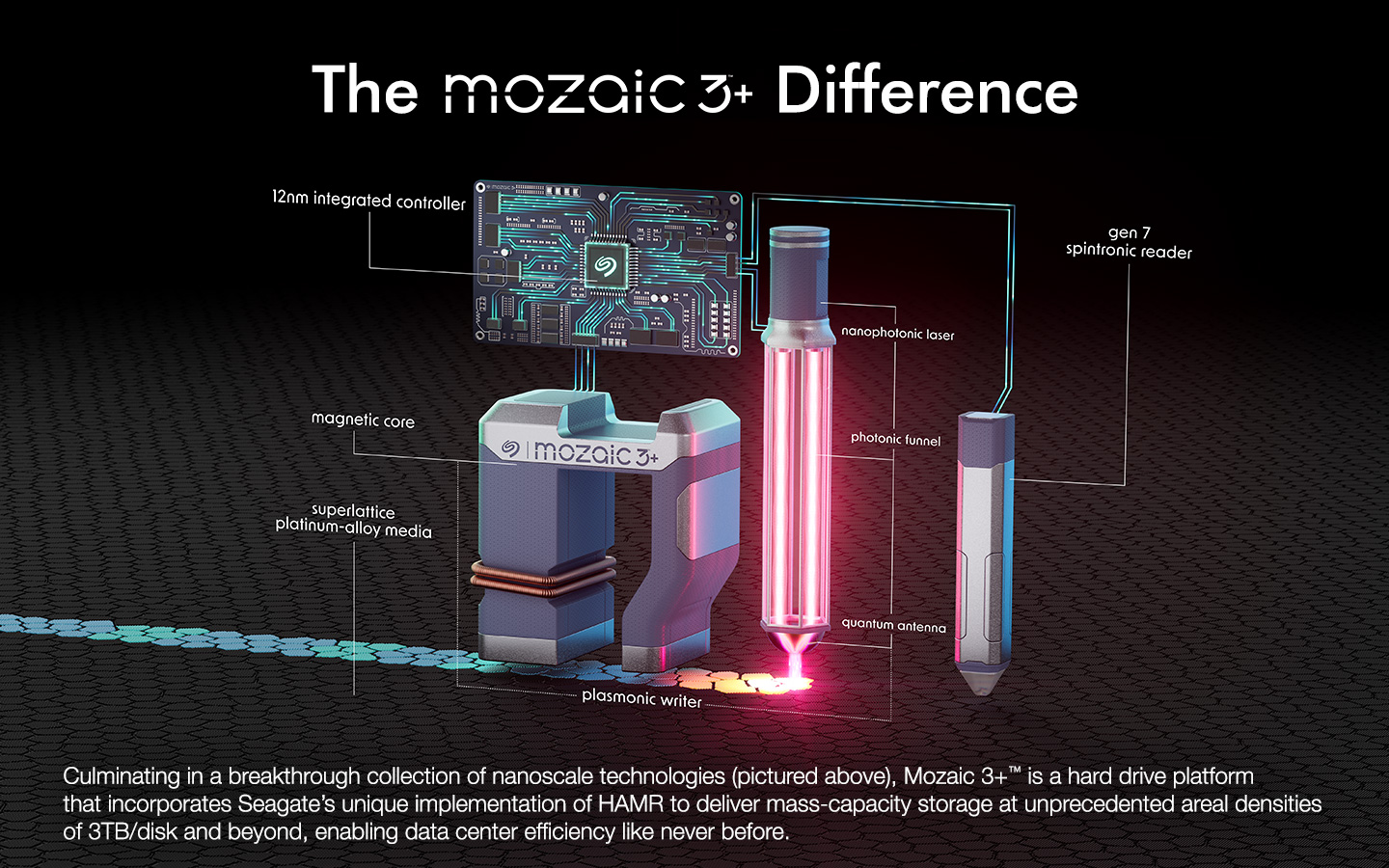
Because PMR technology hit its limit of areal density per platter at 3TB, a new way to increase areal density was needed. Developed by Seagate engineers and launched in January 2024, the Mozaic™ platform marks the world's first implementation of heat-assisted magnetic recording (HAMR), enabling unprecedented areal density.
By leveraging high-coercivity media and localized plasmonic heating, HAMR achieves stable, precise writing at atomic scales, pushing areal density to unprecedented levels while maintaining the industry-standard 3.5-inch form factor.
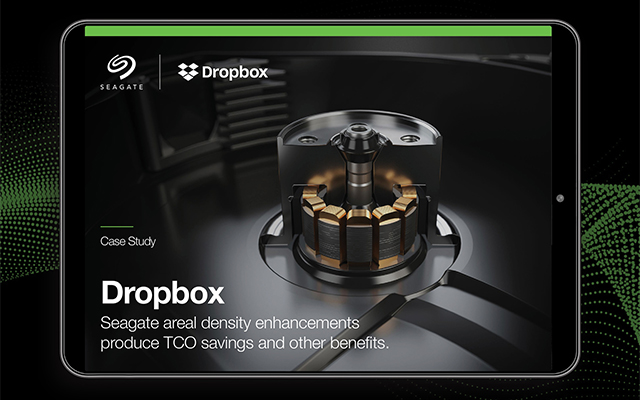
From disk platters to data centers
How does higher areal density improve data center TCO and real estate ROI?
It achieves this by offering higher per-platter data density and thus packing in more storage capacity per drive slot, improving data center utilization without compromising power and sustainability objectives.
Higher per-platter density enables greater capacity without expanding physical infrastructure, reducing real estate costs.
Enterprises can improve real estate ROI for new scale-out or managed fleets with higher per-platter density storage; for example, transitioning from 1TB to 4TB per platter allows a drive to achieve up to 44TB capacity in the same form factor as a 12TB drive.
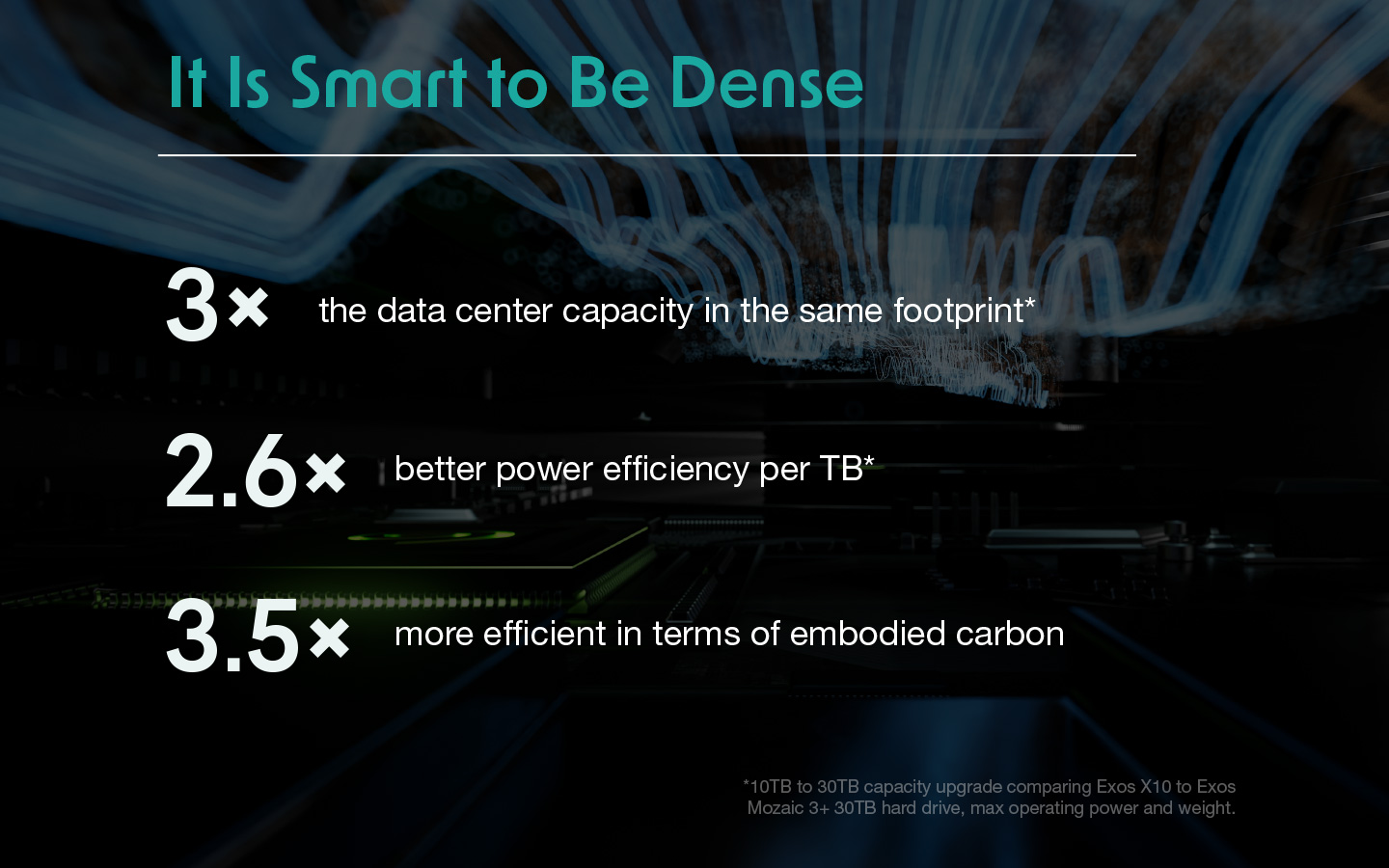
Drives with higher areal density, such as Seagate Exos® 40TB, more than double the power efficiency per terabyte than typical 20TB Exos drives.
Seagate's leadership in areal density supports these scaling benefits for data centers while also lowering the bill of materials (BOM) cost per TB across its full hard drive portfolio, benefiting all markets and applications.
Areal density drives sustainable growth
How does areal density cut embodied carbon and e-waste per terabyte?
Higher-density drives use fewer raw materials per TB, cutting manufacturing needs, energy use, and e-waste.
Seagate's roadmap to achieve 5TB+ per platter in coming years enables scalable data growth while increasing sustainability.
Improved areal density lowers carbon footprints by reducing drive counts and optimizing embodied carbon in data centers. Seagate's Mozaic-equipped drives deliver a 30% or more reduction in embodied carbon per TB, driven by fewer drives per deployment.
Turn Seagate areal density into a deployed Exos configuration
Higher terabytes per disk means more capacity per rack, fewer drives, and lower power and embodied carbon per TB. BlueAlly helps you translate Seagate's areal-density leadership into a right-sized Exos and Mozaic deployment for your data center.
We've developed a partnership with Seagate that lets us compete at the highest level on price and service. That translates into the widest range of in-stock products, fast shipping, and the advice of certified product experts—without the pain of premium pricing. If you need additional guidance in sourcing the right product, our team can bring you together with the presale engineering team.
Seagate is leading the way · Exos
Which Exos hard drives ship with Mozaic 4TB+ per disk areal density today?
Built to enable hyper-efficient, sustainable data storage, Exos mass-capacity hard drives now feature Mozaic, a powerful platform that unleashes areal density of 4TB+ per disk so that you can store more exabytes in the same space for a significantly lower cost.
Seagate’s areal density and TCO research
Deeper reading on areal density, TCO and hard drive innovation.
Areal density: frequently asked questions
The essentials of terabytes per disk, PMR, HAMR and what they mean for your data center.
Areal density is the amount of data stored per unit of surface area on a storage device. Hard drive areal density progression has traditionally been measured in terabytes per square inch (TB/in²), but a more intuitive way of measuring it is terabytes per disk (TB/disk), which refers to the amount of data stored on each spinning platter. Progression in areal density directly impacts how efficiently data can be stored within a physical space.
In the early 2000s, the transition from longitudinal magnetic recording (LMR) to perpendicular magnetic recording (PMR) marked a pivotal increase in areal density by reorienting data bits from a horizontal to a vertical alignment. Because PMR technology hit its limit of areal density per platter at 3TB, a new way to increase areal density was needed. Heat-assisted magnetic recording (HAMR), launched in the Mozaic platform in January 2024, leverages high-coercivity media and localized plasmonic heating to achieve stable, precise writing at atomic scales, pushing areal density to unprecedented levels while maintaining the industry-standard 3.5-inch form factor.
Increasing areal density optimizes data centers and improves real estate ROI for new scale-out or managed fleets. It offers higher per-platter data density and packs in more storage capacity per drive slot, improving data center utilization without compromising power and sustainability objectives. For example, transitioning from 1TB to 4TB per platter allows a drive to achieve up to 44TB capacity in the same form factor as a 12TB drive.
Innovations in areal density are indispensable for sustainable data centers, enhancing resource efficiency and reducing environmental impact. Higher-density drives use fewer raw materials per TB, cutting manufacturing needs, energy use, and e-waste. Improved areal density lowers carbon footprints by reducing drive counts and optimizing embodied carbon in data centers — Seagate's Mozaic-equipped drives deliver a 30% or more reduction in embodied carbon per TB, driven by fewer drives per deployment.
Exos mass-capacity hard drives now feature Mozaic, a powerful platform that unleashes areal density of 4TB+ per disk so that you can store more exabytes in the same space for a significantly lower cost. BlueAlly, an authorized Seagate reseller, can help you assess your storage needs and find the right solution.
Model capacity, power and TCO per TB for denser Exos drives
Whether you're new to enterprise storage or just looking for a next-level upgrade, we can help you find the right solution. Start now by connecting with our experts to better assess your storage needs.
No-cost storage needs assessment
Higher-areal-density Exos & Mozaic configuration
Capacity, power & TCO-per-TB projection
Flexible procurement — CapEx or OpEx
Talk to an Expert
with a BlueAlly Solution Architect